When choosing a plastic grating, also known as a GRP grating, it's essential to consider the maximum span and the associated deflection. These factors determine the safety and durability of your structure.

When choosing a plastic grating, also known as a GRP grating, it's essential to consider the maximum span and the associated deflection. These factors determine the safety and durability of your structure.
The deflection depends on several factors:

Using the load table in our datasheets, you can easily determine which type of GRP grating is suitable for your situation. It compares various loads against the span, clearly showing the expected deflection. This allows you to make a safe and sustainable choice.
If the calculation shows that the deflection is too great, there are two possible solutions:
Both options contribute to reducing deflection and thus increasing safety.
Want to know exactly which grating is best for your situation? Download the datasheets. They contain detailed tables with information on line loads, point loads, distributed loads, and maximum deflection at various spans.
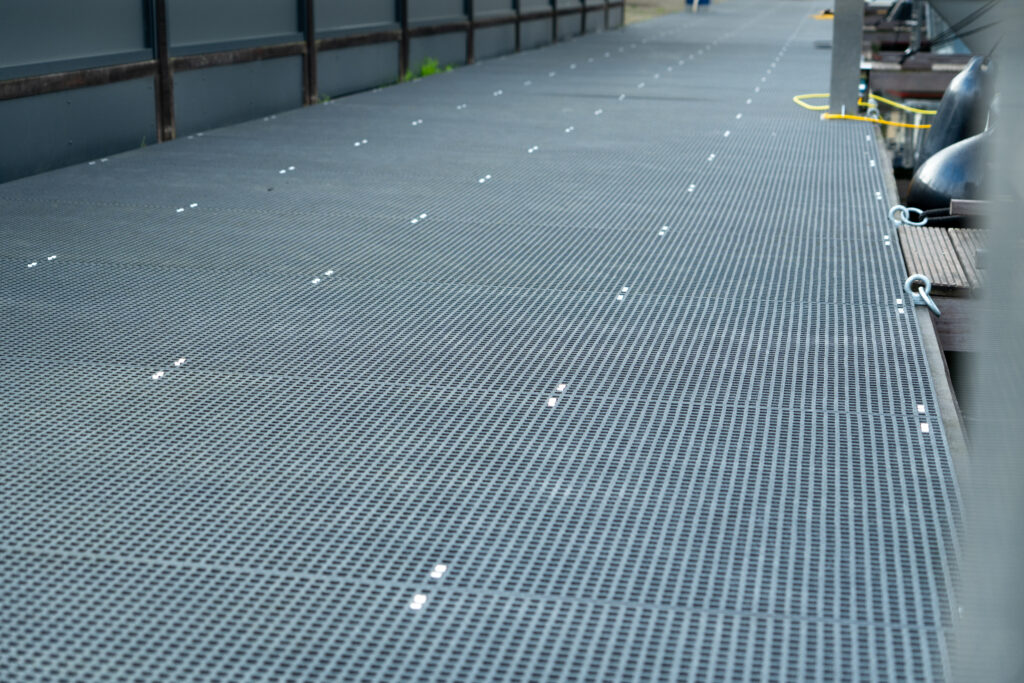
The maximum allowable deflection is 1% of the net span. For a 1000 mm span, this is 10 mm.
The datasheets contain all relevant tables regarding line load, point load and distributed load.
Bij grote overspanningen is het belangrijk een kunststof rooster te kiezen met een hogere sterkteklasse of grotere roosterdikte. Raadpleeg de datasheets voor de juiste belastingwaarden per type rooster en neem eventueel extra ondersteuning in overweging.